The Treadle Project
(Japanese text follows below)
This project is an attempt to bring into the present a way of making that belonged to a time before motor-driven sewing became common in the workshop, when the movement of the hands and feet was itself part of the making condition.
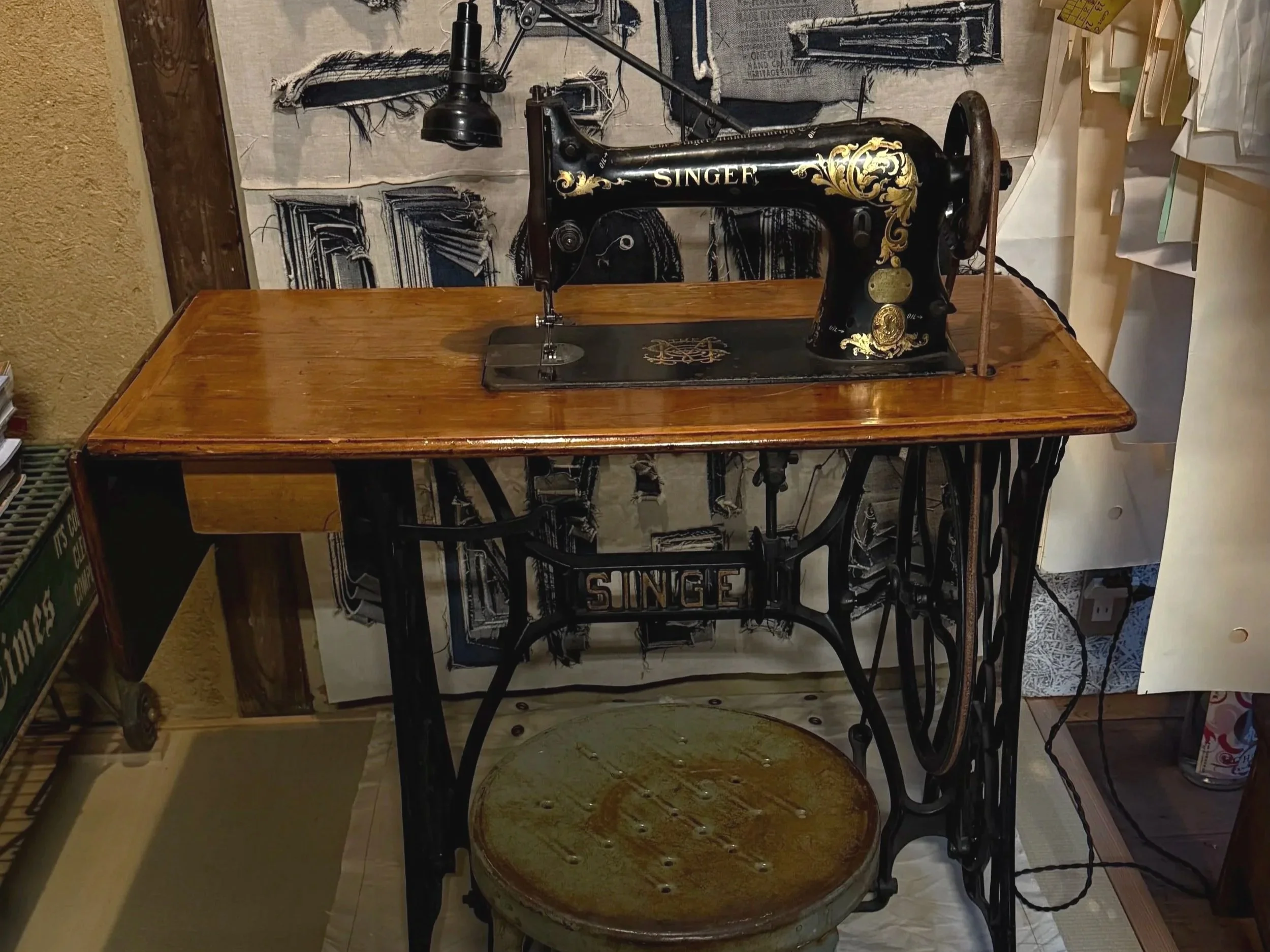
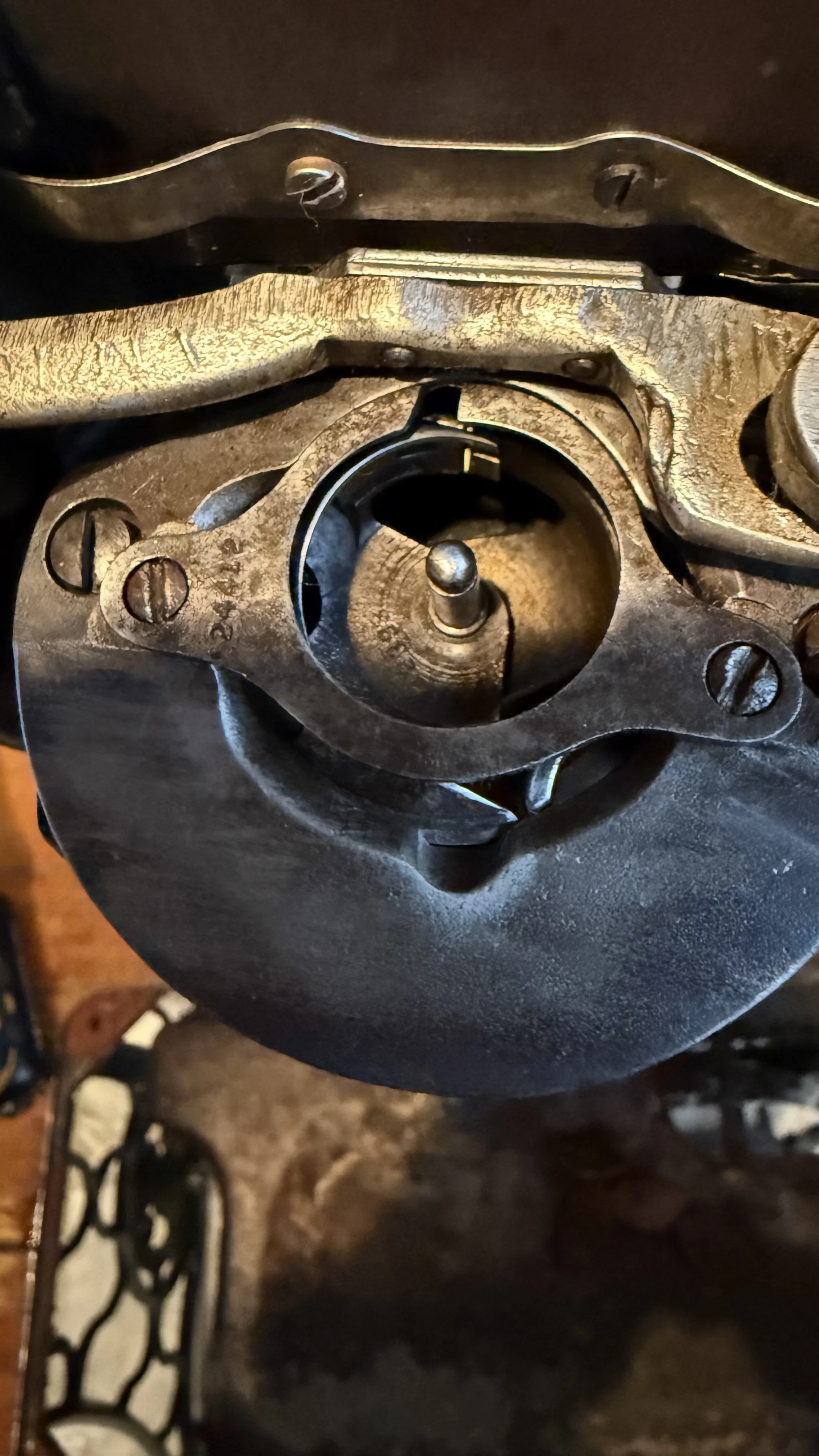
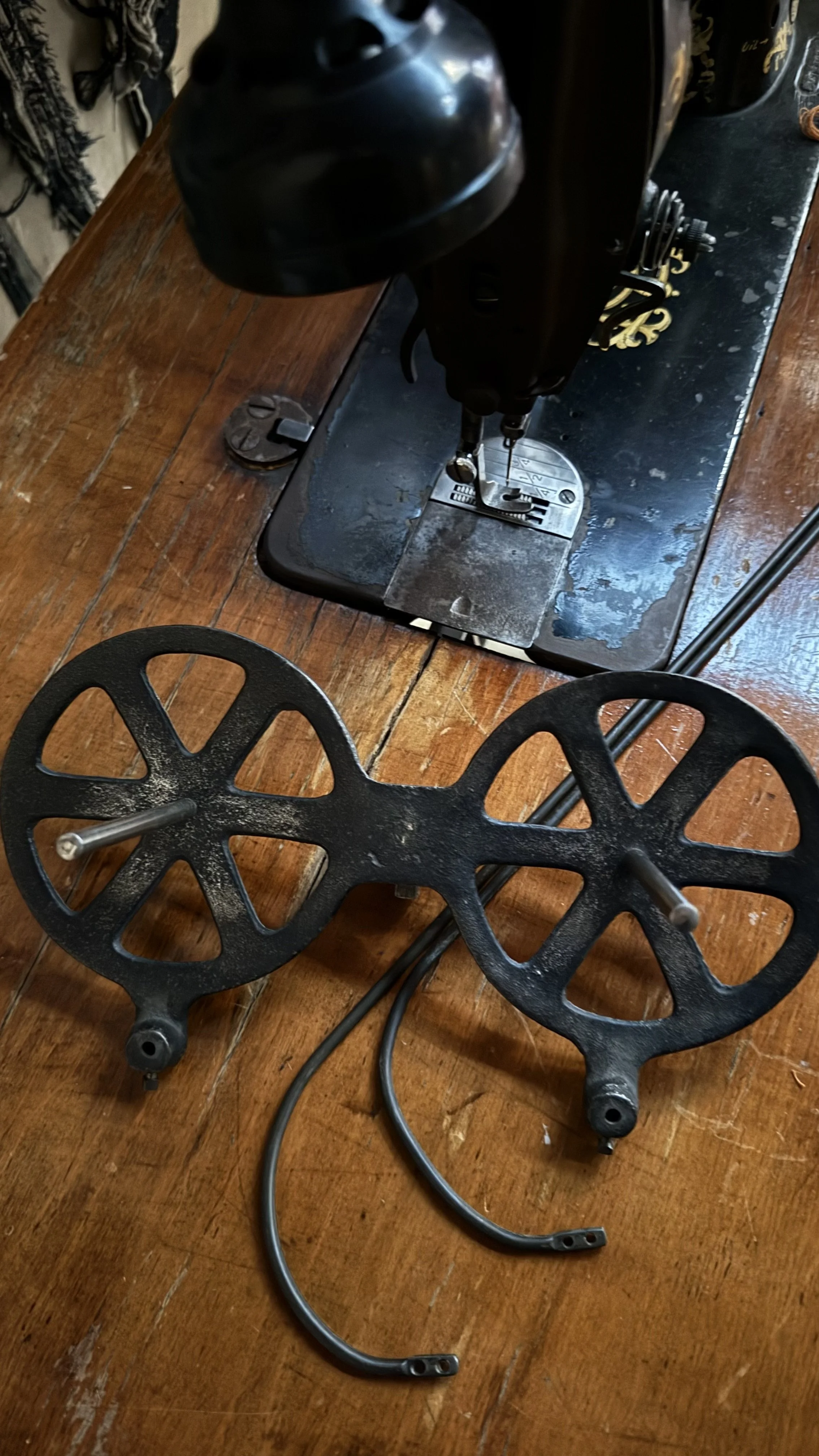
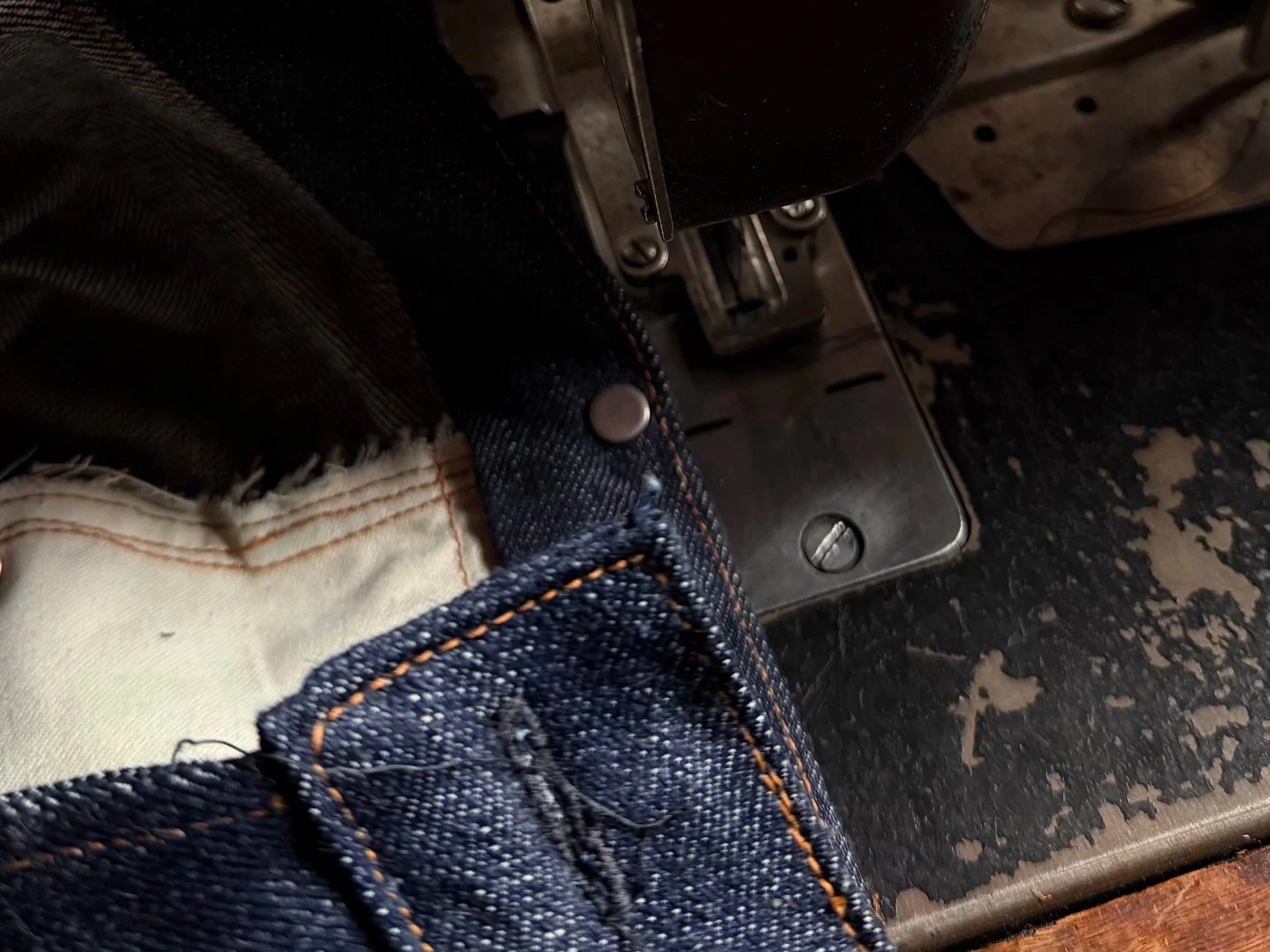
The machines used are only two: a 1910 Singer 31-15 and a 1910 Singer 84-1, both originally made to be operated by treadle.
Normally at BBM, I use vintage machines with a servo motor running at a slow speed. This time, I used only these two machines, powered only by foot treadle.
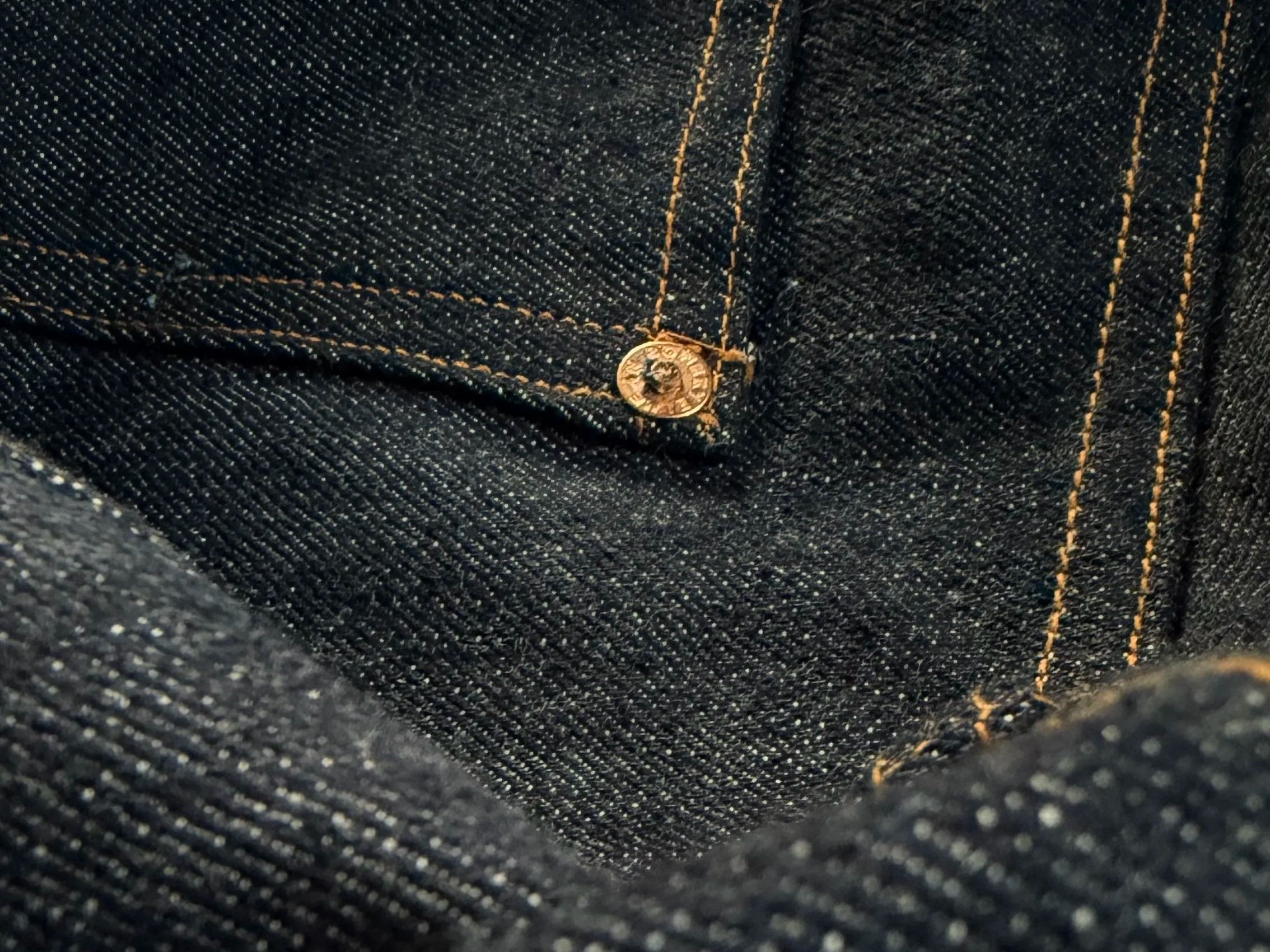
As a result, a more primitive and forceful sewing expression appeared in the finished work, different from the usual BBM making.
This was not something I fully understood in advance. I only felt it clearly after making the sample myself.
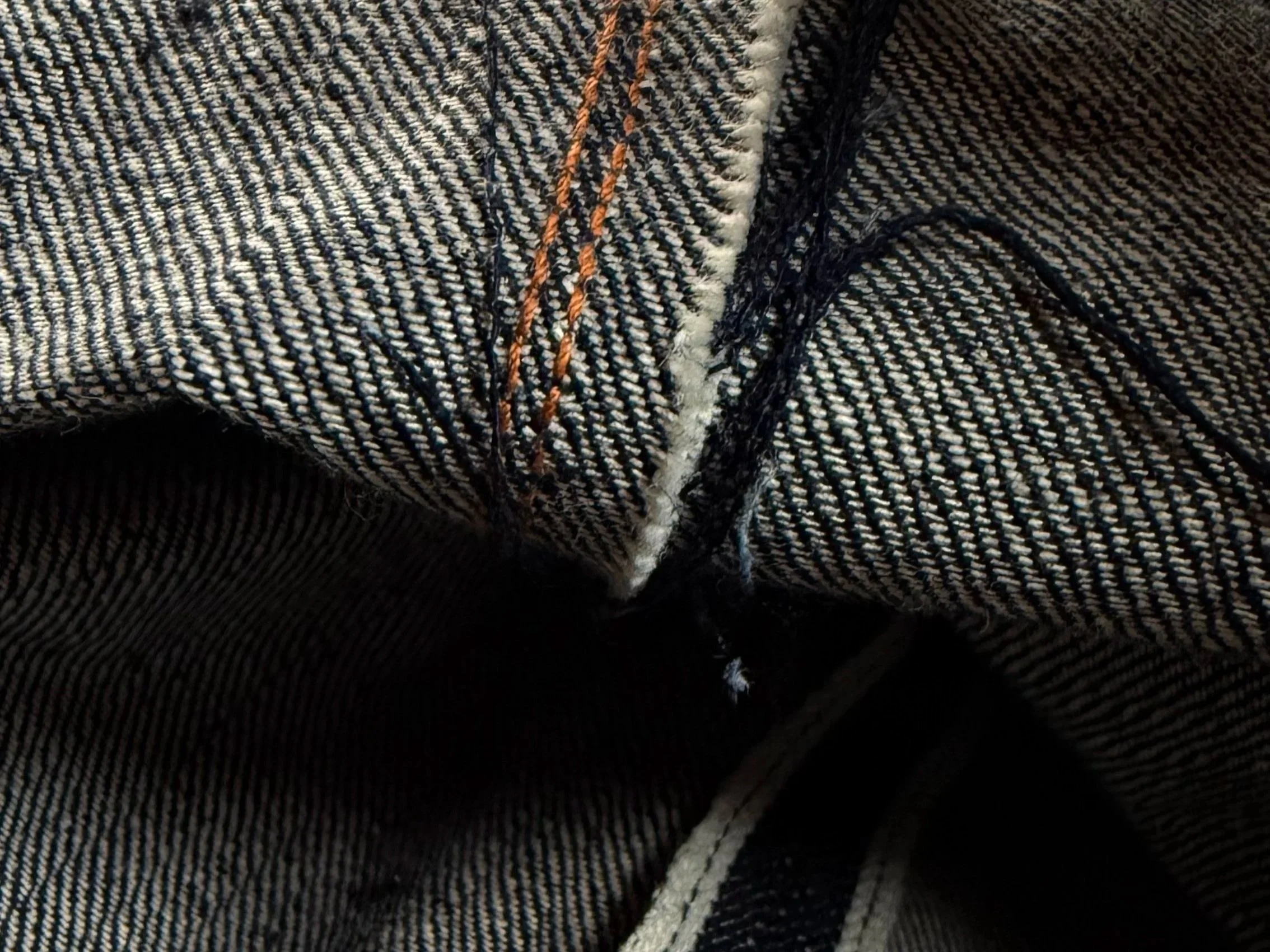
Under this condition, sewing speed, irregularity in the feed, and the tension of the hand pressing the denim all appear directly in the final garment.
The unevenness of the stitching and the differences in tension are not decorative effects, but traces of the making itself, left as part of the structure.
The silhouette and overall design still follow the contemporary line BBM is working with now.
In other words, the shape is modern, while the making belongs to the 19th century.
This way of thinking comes from a longer interest at BBM: not reproducing old forms, but working through the making conditions that once produced them.
BBM has often approached contemporary denim by curating historical tools and construction conditions. In this project, treadle operation introduces an additional constraint, to see whether another kind of form or strength may emerge.
BBM also makes earlier-specification waist overalls using treadle-operated Singer No.2 and Grover & Baker No.1 machines, with hand-sewn buttonholes.
This collection is a more practical step down from that direction.
By using the 31-15, flat-felled seams become possible. By using the 84-1 buttonhole machine, stronger and more resistant buttonholes can be made than hand-sewn buttonholes.
There is also another interest inside this project: not the divided structure of the factory, but the time when one tailor assembled a garment within the limits of a small number of machines.
In that sense, this is not a reproduction of an industrial product, but an attempt to think about jeans that could exist inside a tailor-like making environment.
Following this method, seam allowances at the fly facing and inseam are left unfinished, belt loops are omitted, and adjustment is made through suspenders or a cinch back.
This is not styling. It is the result of limiting the work to what can be carried by these two treadle machines.
This collection is planned as a made-to-order process, completed through dialogue and fitting in the store.
Using prepared samples, waist, length, and options will be discussed before production begins.
For those who want a more contemporary practical specification, the following can be offered as options:
added belt loops
overlock finishing
selvedge fly facing modification
These will be handled on motor-driven vintage machines as historically different options.
BBM has long searched for other forms through making conditions themselves.
This time, I want to push that further and propose a form that carries tools, time, and making philosophy more strongly inside it.
The Treadle Project
To leave, inside a contemporary silhouette, the operation of the treadle machine, the passing of time, and the constraints born there.
A new proposal for experimental bespoke jeans.
Revised Apr. 26, 2026
*This project is still in progress.Details on machines, specifications, samples, and ordering will be added here gradually.
The Treadle Project
このプロジェクトは、蒸気やモーター駆動が縫製現場に普及する以前、足と手の動きそのものが制作条件だった時代の構造を、現代に持ち込む試みです。
使用するミシンは、1910年製の Singer 31-15 と 84-1 の2台で、いずれも足踏み駆動での運用が採用されていた機種です。
通常のBBMでは、ヴィンテージミシンをサーボモーターでゆっくり回転させながら制作していますが、今回はこの2台を使い、足踏み動力のみで制作しました。
その結果、通常のBBMの制作とは違う、より原始的で力のある縫製表情が仕上がりに現れました。
これは最初から頭でわかっていたというより、実際にサンプルを作ってみて初めてはっきり感じた変化です。
この制作方法では、縫製速度、送りの揺らぎ、デニムを押さえる手の緊張が、そのまま仕上がりに現れます。
ステッチの不均一さやテンションの差は、意図的な装飾ではなく、制作そのものの痕跡として構造の一部になります。
今回もシルエットや全体の設計は、BBMが現在取り組んでいる現代的なラインをベースにしています。
形は現代、作り方は19世紀。
この考え方は、形を再現するのではなく、形を生んだ制作条件を扱うという、BBMが以前から持ってきた関心の延長にもあります。
BBMでは、歴史的な道具や構造条件をキュレーションしながら現代のジーンズを作ってきましたが、このプロジェクトでは、そこにさらに足踏みという制約を導入し、別の形態や強さが生まれるかを見ています。
BBMでは、さらに初期仕様の waist overalls も制作していますが、今回のコレクションは、そこから一段現実的な仕様に落とし込んだものです。
31-15 によって折伏せ縫いが可能になり、84-1 のボタンホールミシンによって、手縫いのボタンホールに比べ、より強くほつれにくいボタンホールを作ることができます。
また、このプロジェクトには、工場の分業構造ではなく、限られた機械の中で一人のテイラーが衣服を組み立てていた時代への関心も含まれています。
その意味で、これは工業製品の再現ではなく、テイラー的な制作環境の中で成立するジーンズを考える試みでもあります。
今回の制作方法に合わせ、ボタンフライ裏や内股などの縫い代は切りっぱなしとし、ベルトループは付けず、サスペンダーまたはシンチバックによる調整を基本とします。
これは演出ではなく、今回使用する足踏みの2台で成立する工程に絞った結果です。
このコレクションは、店頭での対話とフィッティングを通して完成していく誂え形式を考えています。
用意したサンプルでウエスト、レングス、オプションなどを確認していただき、その上で制作に入る流れです。
実用性を重視される場合には
・ベルトループ追加
・オーバーロック処理
・フライ裏の耳仕様変更
を、時代考証の異なるオプションとして、モーター駆動のヴィンテージミシンで対応することも考えています。
BBMは以前から、制作条件そのものから別の形態を探ることを続けてきました。
今回はそこからさらに踏み込み、道具、時間、制作思想をより強く含んだ形を提案します。
The Treadle Project
足踏みミシンによる操作、時間、そしてそこで生まれる制約を、現代のシルエットに刻んでいく。
実験的ビスポークジーンズの新しい提案です。
4.26改
*このプロジェクトは現在進行中です。使用ミシン、仕様の違い、サンプル、受注形式などの詳細は、今後ここに順次追加していきます。